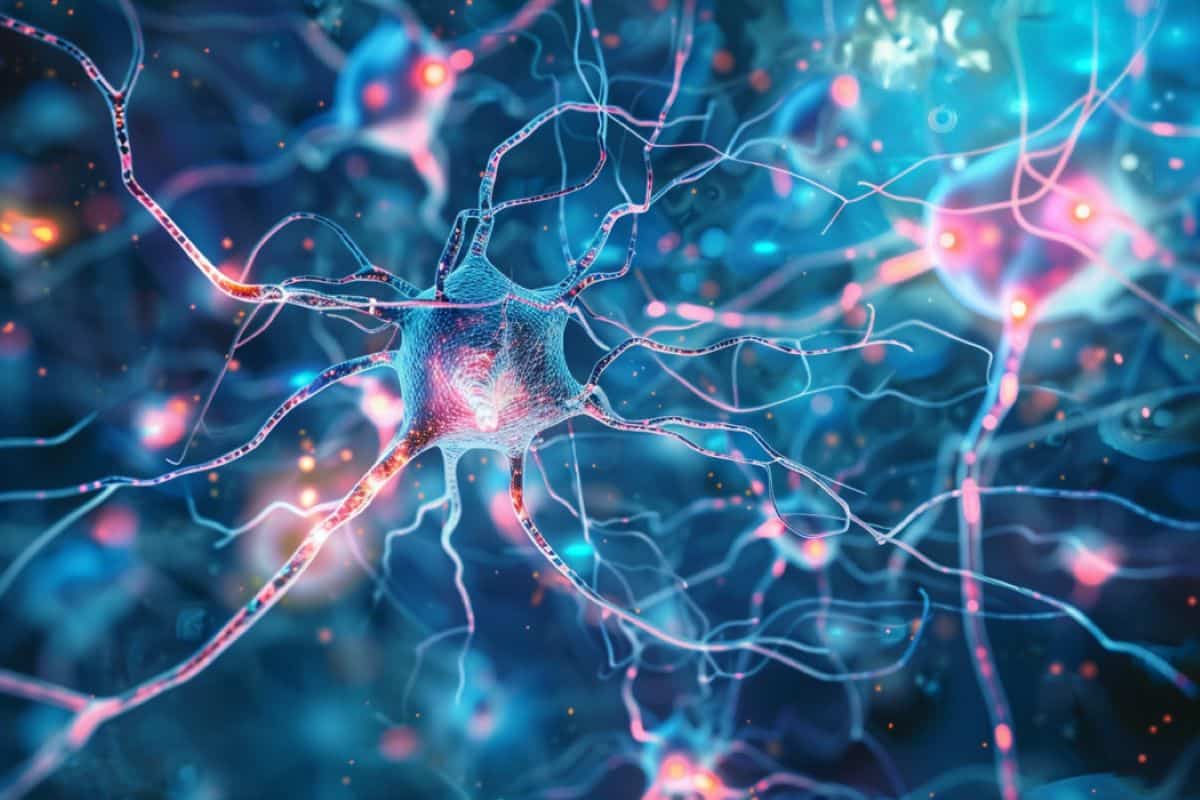
The essence of studying is to pinpoint which parts within the information-processing pipeline are chargeable for an error in output. In synthetic intelligence, that is achieved by backpropagation: adjusting a mannequin’s parameters to scale back the error within the output. Many researchers consider that the mind employs an identical studying precept.However, the organic mind is superior to present machine studying programs. For instance, we are able to be taught new data by simply seeing it as soon as, whereas synthetic programs should be educated a whole lot of instances with the identical items of data to be taught them. Furthermore, we are able to be taught new data whereas sustaining the information we have already got, whereas studying new data in synthetic neural networks usually interferes with current information and degrades it quickly.These observations motivated the researchers to determine the basic precept employed by the mind throughout studying. They checked out some current units of mathematical equations describing modifications within the behaviour of neurons and within the synaptic connections between them. They analysed and simulated these information-processing fashions and located that they make use of a essentially totally different studying precept from that utilized by synthetic neural networks.In synthetic neural networks, an exterior algorithm tries to change synaptic connections as a way to scale back error, whereas the researchers suggest that the human mind first settles the exercise of neurons into an optimum balanced configuration earlier than adjusting synaptic connections. The researchers posit that that is actually an environment friendly characteristic of the best way that human brains be taught. This is as a result of it reduces interference by preserving current information, which in flip hurries up studying.Writing in Nature Neuroscience, the researchers describe this new studying precept, which they’ve termed ‘potential configuration’. They demonstrated in laptop simulations that fashions using this potential configuration can be taught sooner and extra successfully than synthetic neural networks in duties which might be usually confronted by animals and people in nature.The authors use the real-life instance of a bear fishing for salmon. The bear can see the river and it has learnt that if it may possibly additionally hear the river and scent the salmon it’s prone to catch one. But someday, the bear arrives on the river with a broken ear, so it may possibly’t hear it. In a synthetic neural community data processing mannequin, this lack of listening to would additionally end in a scarcity of scent (as a result of whereas studying there isn’t any sound, backpropagation would change a number of connections together with these between neurons encoding the river and the salmon) and the bear would conclude that there isn’t any salmon, and go hungry. But within the animal mind, the shortage of sound doesn’t intrude with the information that there’s nonetheless the scent of the salmon, subsequently the salmon continues to be prone to be there for catching.The researchers developed a mathematical principle exhibiting that letting neurons settle right into a potential configuration reduces interference between data throughout studying. They demonstrated that potential configuration explains neural exercise and behavior in a number of studying experiments higher than synthetic neural networks.Lead researcher Professor Rafal Bogacz of MRC Brain Network Dynamics Unit and Oxford’s Nuffield Department of Clinical Neurosciences says: ‘There is at present an enormous hole between summary fashions performing potential configuration, and our detailed information of anatomy of mind networks. Future analysis by our group goals to bridge the hole between summary fashions and actual brains, and perceive how the algorithm of potential configuration is carried out in anatomically recognized cortical networks.’The first writer of the examine Dr Yuhang Song provides: ‘In the case of machine studying, the simulation of potential configuration on current computer systems is sluggish, as a result of they function in essentially other ways from the organic mind. A brand new sort of laptop or devoted brain-inspired {hardware} must be developed, that can be capable of implement potential configuration quickly and with little vitality use.’The paper, ‘Inferring Neural Activity Before Plasticity: A Foundation for Learning Beyond Backpropagation’, is printed in Nature Neuroscience.
https://www.miragenews.com/brain-learning-differs-from-ai-systems-oxford-1151233/
Brain Learning Differs From AI Systems, Oxford Study Shows